SlotLounge reputation: reviews, complaints and support signals
 Available in AU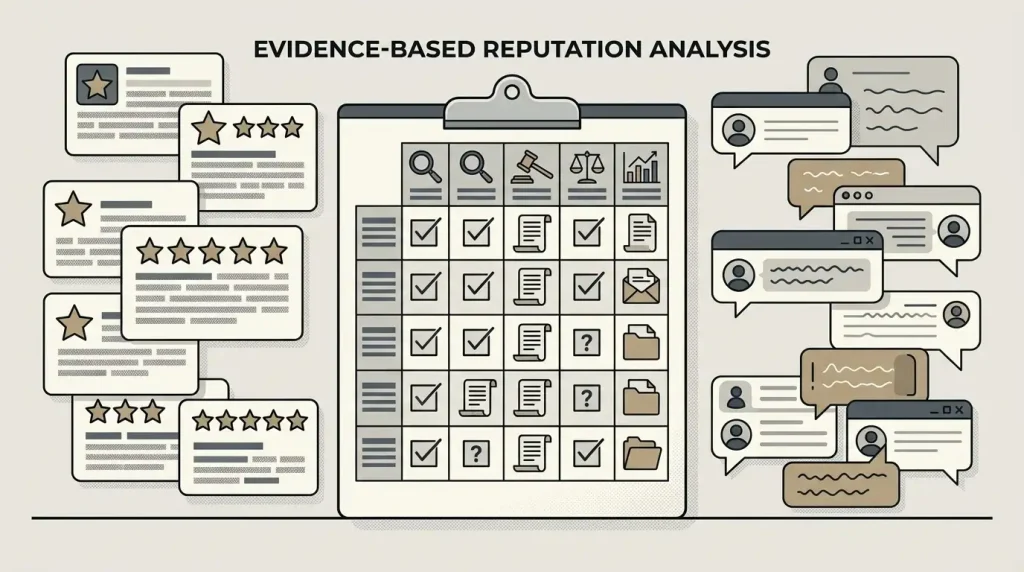
Current public feedback on SlotLounge is mixed rather than one-directional. Trustpilot shows both positive and negative experiences, while recent negative reviews repeatedly discuss withdrawals, identity verification and support communication. AskGamblers also publishes a small complaint record for the casino, with the cases currently shown on its SlotLounge complaint page marked as resolved. None of those sources is a representative sample of all players, so they should not be converted into a payout probability, a safety score or a claim that one experience is typical.
The useful way to read reputation evidence is to separate three things: verified operator facts, individual user reports, and the status assigned by the review or complaint platform. SlotLounge publishes 24/7 support and an email contact on its own support page. A complaint platform can show that a dispute was closed or resolved under its process, but that label does not prove that every similar dispute has the same outcome. For practical checking, focus on dates, withdrawal stage, verification requests, bonus involvement and the final resolution.
Table of Contents
- What the current review record actually shows
- Complaint platforms add process information, not a universal verdict
- Recurring withdrawal complaints: what to inspect first
- Verification complaints need document-level context
- Bonus disputes can look like withdrawal disputes
- Support: verified channels versus reported responsiveness
- Licensing and customer feedback answer different questions
- A practical checklist for evaluating a SlotLounge complaint
- What reputation evidence can and cannot tell you
- Bottom line
What the current review record actually shows
Trustpilot’s SlotLounge profile displays 183 reviews and a TrustScore of 3.0 out of 5. That figure reflects one review platform rather than the whole customer base. The visible review stream includes favourable comments as well as one-star complaints, and several recent negative posts describe delayed withdrawals, repeated document requests or confusion around bonus and verification rules.
Those posts are evidence that these subjects generate user concern. They are not proof that the same events occur to a defined percentage of customers. Public review sites are self-selected: people decide for themselves whether to post, experiences with unusually good or unusually bad outcomes can be more likely to motivate a review, and the platform does not expose a denominator showing how many total withdrawals or support interactions occurred during the same period.
Those reviews alone do not establish whether SlotLounge is safe, unsafe, trustworthy or a scam. Those labels compress several separate questions into a verdict. A more useful approach is to compare a reported problem with the actual rules that would govern it, then check whether the report contains enough detail to evaluate what happened.
Complaint platforms add process information, not a universal verdict
AskGamblers currently lists five SlotLounge complaints on its complaints page and marks all five as resolved. The cases cover issues including withdrawals, account suspension, bonus terms and referral conditions. Individual case pages show the back-and-forth between the complainant, casino and complaint team, which can provide more context than a short star review.
The word “resolved” needs to be read as a platform status. In one published case, the complainant later confirmed receipt of funds. In another, AskGamblers closed the dispute after concluding that the casino had acted in line with the bonus terms, even though the complainant remained dissatisfied. Both can appear under the same resolved label while describing different outcomes. The label therefore tells you how the complaint platform closed a case, not that every allegation was accepted or that every customer concern disappeared.
Five published cases are also a small dataset. They can help identify questions worth asking, but they cannot establish a normal withdrawal time, a normal verification rate or the chance of a dispute. For actual payout mechanics, use the SlotLounge withdrawals, which is based on the operator’s current withdrawal and KYC rules rather than anecdotes.
Recurring withdrawal complaints: what to inspect first
Withdrawal stories are often the most emotionally charged reviews because they involve money that a user expects to receive. Before treating a complaint as evidence of a general payout problem, reconstruct the sequence. Was the account already verified when the request was submitted? Was the withdrawal still inside the operator’s published processing stage? Did a payment provider reject the route? Was a bonus active, and if so, were wagering and maximum-bet conditions relevant?
A useful complaint should make those distinctions. “My withdrawal took too long” gives less information than a timeline showing submission time, verification requests, approval status and final payment. A rejected withdrawal can also mean different things: an identity check, a payment-method issue, a bonus-rule dispute or an account restriction. Those categories should not be merged into one reputation statistic.
For Australian readers, method and currency context matter too. A complaint written by a user in another country may involve a different bank rail, currency, card issuer or document set. Use it to understand the type of friction that can occur, not as a forecast for an AUD withdrawal.
Verification complaints need document-level context
Several public reviews describe repeated requests for verification material. That is relevant because SlotLounge’s terms reserve the right to verify identity before processing payouts. At the same time, a review rarely gives the full operator-side record. A complaint may say that documents were uploaded while the operator says a different document, payment-ownership proof or updated record is required.
The key question is not whether verification exists, because the operator’s rules establish that it can. The useful question is whether the request is specific, connected to the account or payment method, and followed by a clear status update. Keep copies of what was requested, when it was supplied, and any rejection reason. That creates a traceable record if support has to review the case again.
The dedicated SlotLounge account verification explains the KYC framework without treating one reviewer’s requested documents as a universal checklist. That distinction prevents an anecdote from becoming a false rule for every account.
Bonus disputes can look like withdrawal disputes
Some public complaints start with a withdrawal but turn on a bonus condition. A user may regard the balance as ordinary cash while the operator regards it as linked to an active bonus or to a rule that applied during wagering. That makes the bonus history part of the evidence.
When reading this type of complaint, check whether the report identifies the promotion, the applicable terms at the time, the wager size, whether wagering had been completed, and what rule the operator relied on. If those details are missing, the complaint can still describe genuine frustration, but it is harder to use it to judge what rule was applied.
An old complaint’s exact bonus rule should not be treated as if it were the current promotion. Bonus terms change. The current full SlotLounge Australia guide and bonus material should be checked against the current terms rather than reconstructed from a user’s historical dispute.
Support: verified channels versus reported responsiveness
SlotLounge’s official support page currently advertises 24/7 support and lists email support at [email protected]. Those are verifiable channel facts. They do not tell us how quickly every message is answered or whether every dispute is resolved in the user’s favour.
Public reviews include both complaints about slow or unsatisfactory communication and operator responses stating that cases are reviewed through internal procedures. Those are statements from the participants in individual cases, not independent measurements of support performance. A proper support-performance study would need a controlled sample, response-time measurements and consistent test scenarios. The public review record does not provide that.
For a real issue, use the available support channel with a concise timeline and transaction references rather than relying on a public review as the first escalation route. If the issue concerns a withdrawal, include the request time, method, status and verification state. If it concerns a bonus, include the promotion and the term in dispute.
Licensing and customer feedback answer different questions
Reputation evidence should not replace licensing evidence. SlotLounge identifies Stable Tech N.V. as its operator and publishes a Curaçao Gaming Authority licence. The separate SlotLounge licensing deals with that regulatory structure and the Australian context. A strong or weak review profile does not change which entity operates the site or which regulator issued its offshore licence.
The reverse is also true. A licence is not a guarantee that every customer interaction will be satisfactory. Licensing, complaint handling, payment processing and customer service are different questions. Keeping those layers separate makes the evidence easier to evaluate and prevents a review score from becoming a substitute for regulatory facts.
A practical checklist for evaluating a SlotLounge complaint
- Date: Is the complaint recent enough that the same terms and payment routes are likely to apply?
- Country and currency: Does the case involve Australia and AUD, or a different banking and verification environment?
- Withdrawal stage: Was the request pending, rejected, approved, sent to a provider or already returned?
- Verification: What document or ownership check was requested, when was it supplied, and what response followed?
- Bonus involvement: Was a promotion active, and does the complaint identify the exact term in dispute?
- Evidence quality: Are there dates, transaction references, saved images or quoted rules, or only a general conclusion?
- Platform status: If a complaint site says “resolved”, does the case page explain whether payment was made, terms were upheld, or the case was closed for another reason?
- Current rules: Does the complaint’s description match the operator’s current terms, or is it based on an older version?
This checklist does not decide who is right in a dispute. It helps distinguish a detailed case that can be tested against published rules from a short anecdote that offers little context.
What reputation evidence can and cannot tell you
| Signal | Useful for | Not sufficient for |
|---|---|---|
| Trustpilot review stream | Seeing themes users choose to discuss and recent individual experiences | Estimating the percentage of players who experience a problem |
| AskGamblers complaint cases | Reading timelines, responses and platform closure status | Proving that all similar complaints are resolved |
| Official support page | Confirming available support channels | Measuring average response quality or response time |
| Official terms | Checking account, bonus, KYC and withdrawal rules | Showing how every individual case was handled |
| Licence and regulator records | Establishing regulatory facts | Predicting an individual customer’s service experience |
The best decision process uses these sources together without making one stand in for another. Reviews raise questions. Complaint records add case detail. Terms establish published rules. Regulatory sources establish licence and legal context.
Bottom line
SlotLounge’s current public reputation record contains both positive and negative feedback, with withdrawals, verification and support appearing in recent complaints. AskGamblers’ published SlotLounge complaints are currently marked resolved, but the individual case outcomes differ, and neither that status nor a Trustpilot score is a representative performance statistic.
Use reputation evidence to decide what to verify, not to manufacture certainty. Check the current withdrawal rules, keep a record of KYC requests and payment status, and read any complaint through its full timeline. For the Australian legal and consumer-protection context, continue to Australia regulation and BetStop. For account mechanics, use the KYC and withdrawal pages. That evidence-first approach is more informative than either dismissing every complaint or treating every negative review as proof of a general outcome.
Recommend

SlotLounge bonus for Australia: welcome package and terms
The SlotLounge welcome package currently spans four deposits, while headline promotion terms remain time-sensitive. SlotLounge's...
SlotLounge payments in Australia: AUD deposits, withdrawals and crypto
The current payments page groups available methods across cards, wallets, bank transfer and cryptocurrencies. SlotLounge...
SlotLounge in Australia: online casino rules, BetStop and tax context
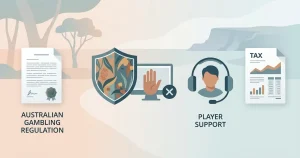
Australian regulation, BetStop, consumer support and tax are related topics, but each has a different...

SlotLounge games and pokies in Australia
Game and provider availability changes over time, including the selection visible to different regions and...

SlotLounge mobile casino and apps in Australia
The current SlotLounge mobile and app-download controls show the brand's available mobile routes. SlotLounge can...
SlotLounge registration and KYC for Australian players
KYC is best understood as part of the account lifecycle, especially when withdrawals are requested....
SlotLounge licence and regulation for Australia
SlotLounge's official terms identify the operator and current Curaçao licence. SlotLounge is operated by Stable...